| WHAT
TO DO |
| |
|
|
|
| |
|
|
|
| MAIN
ATTRACTIONS |
| |
|
|
|
| There
are numerous options for wild life viewing in Mudumalai : |
| |
|
|
|
 |
The
forest department organises van safaris into the National Park twice
a day from Theppakadu (around 6 am in the morning and 4 pm in the
afternoon). Tourists are |
| |
taken around the jungle tracks in large vans and rates are Rs 25
per person for one hour. These offer very good value for money but
getting seats during the holiday season is not always easy. The
vans are covered on all sides and viewing is done through the window
grills, which is not as good as open jeep rides for viewing and
photography. Bookings are to be made at the Forest department’s
reception centre at Theppakadu. |
|
| |
|
|
|
|
The
forest department also offers elephant rides into the forest in
the mornings and afternoons (6.30 am and 4 pm). Bookings can be
made at the reception office at Theppakadu. While more exciting
than the van rides, animal sightings are generally fewer as the
distances covered are less. The rides cost around Rs 100 per hour
for four persons. |
| |
|
|
|
|
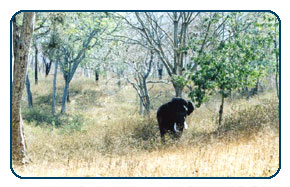
Mudumalai
is a trekkers’ paradise, with a number of routes. On treks
we have seen tuskers, bison, sloth bears, sambar deer and wild dogs,
apart from a number of smaller |
| |
animals.
Many lucky tourists have sighted tigers and leopards on treks. Treks
are strictly to be undertaken only with experienced guides, as it
is very risky to venture alone into the jungles. Most resorts offer
trekking guides. The popular trekking routes are Bokkapuram to Solur,
Singara reverine trek, Sigur bridge trek and Chemmanatham to Moyar.
Treks can be undertaken at any time during daytime, but early morning
and late afternoon are ideal for sightings. Trekking |
|
| |
rates are quite nominal (around Rs 50-100 per hour per person).
Check with your resort for rates. |
| |
|
|
|
|
Most
private resorts also offer safari drives through the various roads
which run across the sanctuary. The night safari drives are very
popular since quite a few animals are normally seen crossing the
roads or feeding near streams or rivers. The safaris cost about
Rs 750 for a two hour drive. It is essential that you go with a
regular “watcher” who can spot animals in the darkness. |
| |
|
|
|
|
The
forest department has watch towers which can be hired at Rs 40 per
night for two persons. Some private resorts also have ‘matchans’
where one can sit up to observe animals. These are generally located
near water holes or streams. |
| |
|
|
|
| OTHER
ATTRACTIONS |
| |
|
|
|
|
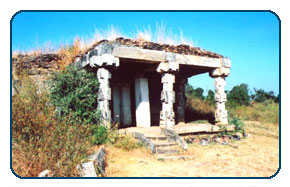
Two
kilometers from Mavanalla village (about 6 kms from Masinagudi)
is the tribal settlement of Chemmanatham. Set at the entrance to
the settlement are the ruins of an ancient Basaveswara temple dedicated
to Lord Shiva, who appears as a linga with his mount, the holy Bull
‘Nandi’. The temple is supposed to be over 300 years
old. Legend has it that there was a large fortified township at
this place which got wiped out in a matter of days by a mysterious
illness. |
| |
|
| |
|
|
|
| |
The
main temple is a surprisingly well preserved granite structure,
supported by stone pillars with interesting and quaint carvings
of Shiva, other Gods and devotees. The temple has no doors (as is
common with forest temples) and is supposed to be the haunt of bears
at night. For an amazing true story about this temple read Kenneth
Anderson's "A Tiger Roars" (See chapter titled "The
Queer Side of Things") |
| |
|
|
|
|
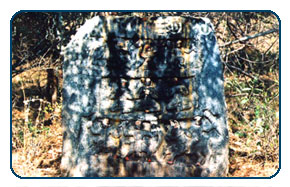
On
the road to Chemmanatham (on your left after about 400 meters from
the main road) you will find Hero stones dating back to the Vijayanagar
period (13-14th Century AD). These ancient stones depict people
worshipping Lord Shiva in the linga form. Some women are shown worshipping
while the men are seen fighting enemies with bows and arrows. Notice
the Sun and the Moon on either side of Shiva, depicting the Universe.
|
|
| |
|
|
|
|
The
Moyar gorge near Theppakadu, where the river drops over 300 meters,
is very picturesque. One can also visit the Sigur falls near Masinagudi,
which is very impressive after the monsoon, with the water cascading
deep down the steep mountain side. |
| |
|
|
|
|
The
elephant camp at Theppakadu is very popular with tourists. The only
ones of its kind in India (like the famous elephant orphanage in
Srilanka), this camp is home to a mix of adult males, abandoned
calves, expectant and sick mothers and ‘old timers’
who are now pensioners. One can observe the elephants being given
a bath in the Moyar river and fed large balls of rice and millets
by their mahouts (elephant trainers), sick elephants being treated
by doctors, young calves playing around and huge tuskers kept chained
in separate enclosures. The relationship between these giants and
their mahouts is worth observing. The evening ‘pooja’
at the local temple, performed by baby elephants, is a big hit with
children of all ages. |
| |
|
|
|
|
Masinagudi
is a quaint and small jungle hamlet, with a colourful market sporting
an assortment of small shops and restaurants. It is an interesting
experience to stroll through the main street and interact with the
tea stall owners, shop keepers and jeep drivers here to get a feel
of how life moves on in a remote corner of India like this. |
| |
|
|
|
|
One
can also visit the Singara and Moyar power houses of the Pykara
hydro-electric system (prior permission needs to be taken from the
authorities). |
| |
|
|
|
| |
|
|
|